Selasa, 15 April 2014

25 Examples of Body Language

They say a picture paints a thousand words – and the same can certainly be said for gestures. We all subconsciously give away hints as to our true feelings, through our movements and gestures. This is a list of 25 examples of body language.
Gestures 1 – 5
45045059
Gesture: Brisk, erect walk
Meaning: Confidence
Gesture: Standing with hands on hips
Meaning: Readiness, aggression
Gesture: Sitting with legs crossed, foot kicking slightly
Meaning: Boredom
Gesture: Sitting, legs apart
Meaning: Open, relaxed
Gesture: Arms crossed on chest
Meaning: Defensiveness

Gestures 6 – 10
23467099
Gesture: Walking with hands in pockets, shoulders hunched
Meaning: Dejection
Gesture: Hand to cheek
Meaning: Evaluation, thinking
Gesture: Touching, slightly rubbing nose
Meaning: Rejection, doubt, lying
Gesture: Rubbing the eye
Meaning: Doubt, disbelief
Gesture: Hands clasped behind back
Meaning: Anger, frustration, apprehension
Gestures 11 – 15
Eriksson Rubs Hands
Gesture: Locked ankles
Meaning: Apprehension
Gesture: Head resting in hand, eyes downcast
Meaning: Boredom

Gesture: Rubbing hands
Meaning: Anticipation
Gesture: Sitting with hands clasped behind head, legs crossed
Meaning: Confidence, superiority
Gesture: Open palm
Meaning: Sincerity, openness, innocence
Gestures 16 – 20
23317402
Gesture: Pinching bridge of nose, eyes closed
Meaning: Negative evaluation
Gesture: Tapping or drumming fingers
Meaning: Impatience
Gesture: Steepling fingers
Meaning: Authoritative
Gesture: Patting/fondling hair
Meaning: Lack of self-confidence; insecurity
Gesture: Quickly tilted head
Meaning: Interest
Gestures 21 – 25
Fingernails
Gesture: Stroking chin
Meaning: Trying to make a decision
Gesture: Looking down, face turned away
Meaning: Disbelief
Gesture: Biting nails
Meaning: Insecurity, nervousness
Gesture: Pulling or tugging at ear
Meaning: Indecision
Gesture: Prolonged tilted head
Meaning: Boredom

Source here

Kamis, 27 Maret 2014

Another 25 Words you Don’t Know

Following on from our first list of words you don’t know, we present another 25. Learn one a day and impress your friends!
Words 25 – 21
Dictionary
25. Girn – To bare your teeth in anger and sadness
24. Yerd – To beat with a stick.
23. Dendrofilous – Loving trees enough to live in them.
22. Wamfle – To walk around with flapping clothes.
21. Ribazuba – Ivory from a walrus.

Words 20 – 16
Dictionary2
20. Franch – To eat greedily.
19. Nazzard – A lowly or weak person.
18. Cachinnate – To laugh noisily.
17. Sesamoid – Having the size and shape of a sesame seed.
16. Yerk – To tie with a jerk.
Words 15 – 11
754Px-Latin Dictionary
15. Mullion – A vertical dividing piece between window lights or panels.
14. Labrose – Thick-lipped
13. Misodoctakleidist – Someone who dislikes practicing the piano.

12. Hesternal – Having to do with yesterday.
11. Crurophilous – Liking legs.
Words 10 – 6
Dictionary Thumb[1]
10. Glabella – The space on your forehead between your eyebrows.
9. Fample – To feed a child.
8. Coprolalomaniac – Someone who compulsively uses foul language.
7. Onychotillomaniac – Someone who constantly picks his or her nails.
6. Glossolalia – Gibberish; babble
Words 5 – 1
Dictionary-1
5. Gash-gabbit – Having a protruding chin.
4. Sneckdraw – A sneaky or mean person.
3. Hircine – Something that smells like a goat.
2. Wallydrag – A completely useless person.
1. Onygophagist – A person who bites his or her nails.

Source here

Sabtu, 08 Maret 2014

Top 10 Controversial Nobel Peace Prize Winners

The Nobel Peace Prize was created by Alfred Nobel, the inventor of dynamite. Nobel asked that the prize be awarded “to the person who shall have done the most or the best work for fraternity between the nations, for the abolition or reduction of standing armies and for the holding and promotion of peace congresses”. This, unfortunately, has not always been the case. Here are the ten most controversial recipients of the Nobel Peace Prize:
10. Jimmy Carter 175674~Jimmy-Carter-Posters
Jimmy Carter’s 2002 Nobel Peace Prize—awarded for the “decades of untiring effort to find peaceful solutions to international conflicts, to advance democracy and human rights, and to promote economic and social development”—had from the start wrought controversy that was exacerbated further by politically-tinted statements offered by the chairman of the Nobel Peace Prize committee (seconded and affirmed by Gunnar Staalsett, another member of the 5-member, secretive Nobel Committee).

9. Wangari Maathai
Wangarimaathai
Wangari Maathai, 2004 winner of the Nobel Peace Prize, created controversy by appearing to lend credibility to the theory that HIV was invented by white scientists to destroy black people but later apologized for giving the illusion of being a conspiracy theorist.


8. Al Gore Algore
Al Gore won the 2007 Nobel Peace Prize for his work on raising public awareness of Global Warming. There has been some contention on whether the work was related to the stated purpose of the prize or not. In addition, there is much controversy surrounding his work in the area of Global Warming and, in fact, even controversy over whether Global Warming poses a real threat to mankind. Recently a UK High Court judge decreed that the government could only send a copy of “An Inconvenient Truth” to every school if it was accompanied by guidelines to point out “nine scientific errors” and to counter his “one-sided views”. In his film, Al Gore called on Americans to conserve energy by reducing electricity consumption at home. In August 2006, Gore’s electricity bills revealed that in one month he burned through 22,619 kilowatts – more than twice what the average family uses in an entire year.
7. Rigoberta Menchú
3 Rigobertamenchu
Rigoberta Menchú won the Nobel Peace Prize in 1992. There has been some evidence pointing to her as a fraud in her purported autobiography of her life in Guatemala in the late 1950s, portrayed in her 1987 book I, Rigoberta Menchu—where some facts regarding her family history and circumstances were specifically altered by her to supposedly better propagandize her leftist-leanings (brought to light through exposé by anthropologist David Stoll’s researches).
6. Henry Kissinger
395Px-Henry Kissinger
Kissinger received the Nobel Peace Prize in 1973 for his work on the Vietnam Peace Accords, despite having instituted the secret 1969–1975 campaign of bombing against infiltraiting NVA in Cambodia, the alleged U.S. involvement in Operation Condor—a mid-1970s campaign of kidnapping and murder coordinated among the intelligence and security services of Argentina, Bolivia, Brazil, Chile, Paraguay, and Uruguay—as well as the death of French nationals under the Chilean junta. He also supported the invasion of Cyprus resulting in approximately 1/3 of the island being occupied by foreign troops for 33 years. Some peace activists go so far as to suggest that the Nobel Peace Prize has become irrelevant due to Kissinger being a laureate.
Discover a universe full of ridiculously interesting facts with Listverse.com’s Epic Book of Mind-Boggling Top 10 Lists
at Amazon.com!


5. Yitzhak Rabin 17Ede6C20070504141528901
Rabin won the prize jointly with Shimon Peres and Yasser Araft in 1994. Rabin, while in the Israeli military, had ordered the expulsion of Arabs, from areas captured by Israel during the 1948 War. He had also been responsible for the aggressive Israeli crackdown of the First Intifada while Defense Minister. Rabin also continued to authorise the construction of settlements in the occupied territories despite the peace agreement.
4. Shimon Peres
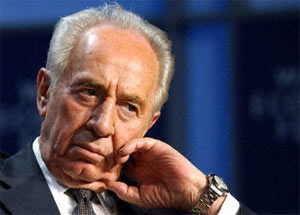
Shimon
Awarded the prize jointly with Yitzhak Rabin and Yasser Arafat, Peres was responsible for developing Israel’s nuclear weapons arsenal, and was later blamed for the Qana Massacre. The Qana Massacre occurred in 1996 when the Israeli military shelled a villiage of 800 Lebanese civilians who had gone there to escape the fighting. 106 were killed and around 116 others injured. Four Fijian United Nations Interim Force in Lebanon soldiers were also seriously injured.
3. Yasser Arafat
Arafat020925
Arafat won the 1994 prize along with Shimon Peres and Yitzhak Rabin. Arafat was regarded by critics as a terrorist leader for many years. Kåre Kristiansen, a Norwegian member of the Nobel Committee, resigned in 1994 in protest at the awarding of a Nobel Peace Prize to Yasser Arafat, whom he labeled a “terrorist”.
2. Cordell Hull
408Px-Hull-Cordell-Loc
Cordell Hull was awarded the Nobel Prize in Peace in 1945 in recognition of his efforts for peace and understanding in the Western Hemisphere, his trade agreements, and his work to establish the United Nations. In 1939, the ship SS St Louis sailed out of Hamburg into the Atlantic Ocean carrying over 950 Jewish refugees, mostly wealthy, seeking asylum from Nazi persecution just before World War II. Roosevelt showed modest willingness to allow the ship in, but Hull, his Secretary of State threaten to withhold their support of Roosevelt in the 1940 Presidential election if this occurred. Roosevelt denied entry to the ship. The ship was forced to return to Germany and many of the passengers ultimately ended up dying in Concentration Camps.
1. Menachem Begin
Beginspeak
Menachem Begin (6th Prime Minister of Israel) was awarded the Nobel Peace Prize in 1978 for his contributions to the successful closure to the Camp David Accords in the same year (the award was jointly given to Begin and Anwar Sadat). Unfortunately, Begin had also previously been head of the militant Zionist group Irgun, which is often regarded as a terrorist organization and had been responsible for the King David Hotel bombing in 1946.
Final Thoughts
While the controversial people listed above enjoy (or enjoyed) their Nobel Peace prizes, Mahatma Gandhi was never awarded one (though he was nominated five times). In addition, in the fields of science, great men such as Nicola Tesla and Thomas Edison were not awarded prizes because of their animosity towards each other. If Tesla had won, the money would probably have prevented him from filing for bankruptcy in 1916, and the face of modern society may have been very different.
This article is licensed under the GFDL. It uses material from the Wikipedia articles: Qana Massacre, and Nobel Prize Controversies

Source here

10 Methods of Death

New Scientist magazine has pondered the subject in great depth in its latest issue, discussing the various ways of meeting one’s end, from being burned alive to drowning and decapitation. The experts have taken their evidence from advances in medical sciences and accounts from lucky survivors. Whatever the mode of death, it is usually a lack of oxygen to the brain that delivers the “coup de grace”, says the report. Warning: Contains Graphic Images
1. Drowning
Drowning
The “surface struggle” for breath
Death by drowning has a certain dark romance to it: countless literary heroines have met their end slipping beneath the waves with billowy layers of petticoats floating around their heads. In reality, suffocating to death in water is neither pretty nor painless, though it can be surprisingly swift.
Just how fast people drown depends on several factors, including swimming ability and water temperature. In the UK, where the water is generally cold, 55 per cent of open-water drownings occur within 3 metres of safety. Two-thirds of victims are good swimmers, suggesting that people can get into difficulties within seconds, says Mike Tipton, a physiologist and expert in marine survival at the University of Portsmouth in the UK.
Typically, when a victim realises that they cannot keep their head above water they tend to panic, leading to the classic “surface struggle”. They gasp for air at the surface and hold their breath as they bob beneath, says Tipton. Struggling to breathe, they can’t call for help. Their bodies are upright, arms weakly grasping, as if trying to climb a non-existent ladder from the sea. Studies with New York lifeguards in the 1950s and 1960s found that this stage lasts just 20 to 60 seconds.
When victims eventually submerge, they hold their breath for as long as possible, typically 30 to 90 seconds. After that, they inhale some water, splutter, cough and inhale more. Water in the lungs blocks gas exchange in delicate tissues, while inhaling water also triggers the airway to seal shut – a reflex called a laryngospasm. “There is a feeling of tearing and a burning sensation in the chest as water goes down into the airway. Then that sort of slips into a feeling of calmness and tranquility,” says Tipton, describing reports from survivors.
That calmness represents the beginnings of the loss of consciousness from oxygen deprivation, which eventually results in the heart stopping and brain death.
You’ll watch your every step after you see 1000 Ways to Die 3 DVD set at Amazon.com!

2. Heart attack
Casualty-Care Clip Image004
One of the most common forms of exit
The “Hollywood Heart Attack”, featuring sudden pain, desperate chest-clutching and immediate collapse, certainly happens in a few cases. But a typical “myocardial infarction”, as medical-speak has it, is a lot less dramatic and comes on slowly, beginning with mild discomfort.
The most common symptom is, of course, chest pain: a tightness, pressure or squeezing, often described as an “elephant on my chest”, which may be lasting or come and go. This is the heart muscle struggling and dying from oxygen deprivation. Pain can radiate to the jaw, throat, back, belly and arms. Other signs and symptoms include shortness of breath, nausea and cold sweats.
Most victims delay before seeking assistance, waiting an average of 2 to 6 hours. Women are the worst, probably because they are more likely to experience less well-known symptoms, such as breathlessness, back or jaw pain, or nausea, says JoAnn Manson, an epidemiologist at Harvard Medical School. Survivors say they just didn’t want to make a fuss; that it felt more like indigestion, tiredness or muscle cramps than a heart attack. Then again, some victims are just in denial.
Delay costs lives. Most people who die from heart attacks do so before reaching hospital. The actual cause of death is often heart arrhythmia – disruption of the normal heart rhythm, in other words.
Even small heart attacks can play havoc with the electrical impulses that control heart muscle contraction, effectively stopping it. In about 10 seconds the person loses consciousness, and minutes later they are dead.
Patients who make it to hospital quickly fare much better; in the UK and US more than 85 per cent of heart attack patients admitted to hospital survive to 30 days. Hospitals can deploy defibrillators to shock the heart back into rhythm, and clot-busting drugs and artery-clearing surgery.
3. Bleeding to death
Markinmexico-Americankilled
Several stages of haemorrhagic shock
The speed of exsanguination, as bleeding to death is known, depends on the source of the bleed, says John Kortbeek at the University of Calgary in Alberta, Canada, and chair of Advanced Trauma Life Support for the American College of Surgeons. People can bleed to death in seconds if the aorta, the major blood vessel leading from the heart, is completely severed, for example, after a severe fall or car accident.
Death could creep up much more slowly if a smaller vein or artery is nicked – even taking hours. Such victims would experience several stages of haemorrhagic shock. The average adult has 5 litres of blood. Losses of around 750 millilitres generally cause few symptoms. Anyone losing 1.5 litres – either through an external wound or internal bleeding – feels weak, thirsty and anxious, and would be breathing fast. By 2 litres, people experience dizziness, confusion and then eventual unconsciousness.
“Survivors of haemorrhagic shock describe many different experiences, ranging from fear to relative calm,” Kortbeek says. “In large part this would depend on what and how extensive the associated injuries were. A single penetrating wound to the femoral artery in the leg might be less painful than multiple fractures sustained in a motor vehicle crash.”
4. Fire
Fire2
It’s usually the toxic gases that prove lethal
Long the fate of witches and heretics, burning to death is torture. Hot smoke and flames singe eyebrows and hair and burn the throat and airways, making it hard to breathe. Burns inflict immediate and intense pain through stimulation of the nociceptors – the pain nerves in the skin. To make matters worse, burns also trigger a rapid inflammatory response, which boosts sensitivity to pain in the injured tissues and surrounding areas.
As burn intensities progress, some feeling is lost but not much, says David Herndon, a burns-care specialist at University of Texas Medical Branch in Galveston. “Third-degree burns do not hurt as much as second-degree wounds, as superficial nerves are destroyed. But the difference is semantic; large burns are horrifically painful in any instance.”
Some victims of severe burns report not feeling their injuries while they are still in danger or intent on saving others. Once the adrenalin and shock wear off, however, the pain quickly sets in. Pain management remains one of the most challenging medical problems in the care of burns victims.
Most people who die in fires do not in fact die from burns. The most common cause of death is inhaling toxic gases – carbon monoxide, carbon dioxide and even hydrogen cyanide – together with the suffocating lack of oxygen. One study of fire deaths in Norway from 1996 found that almost 75 per cent of the 286 people autopsied had died from carbon monoxide poisoning.
Depending on the size of the fire and how close you are to it, concentrations of carbon monoxide could start to cause headache and drowsiness in minutes, eventually leading to unconsciousness. According to the US National Fire Protection Association, 40 per cent of the victims of fatal home fires are knocked out by fumes before they can even wake up.


5. Decapitation La Decapitation
Nearly instantaneous
Beheading, if somewhat gruesome, can be one of the quickest and least painful ways to die – so long as the executioner is skilled, his blade sharp, and the condemned sits still.
The height of decapitation technology is, of course, the guillotine. Officially adopted by the French government in 1792, it was seen as more humane than other methods of execution. When the guillotine was first used in public, onlookers were reportedly aghast at the speed of death.
Quick it may be, but consciousness is nevertheless believed to continue after the spinal chord is severed. A study in rats in 1991 found that it takes 2.7 seconds for the brain to consume the oxygen from the blood in the head; the equivalent figure for humans has been calculated at 7 seconds. Some macabre historical reports from post-revolutionary France cited movements of the eyes and mouth for 15 to 30 seconds after the blade struck, although these may have been post-mortem twitches and reflexes.
If you end up losing your head, but aren’t lucky enough to fall under the guillotine, or even a very sharp, well-wielded blade, the time of conscious awareness of pain may be much longer. It took the axeman three attempts to sever the head of Mary Queen of Scots in 1587. He had to finish the job with a knife.
Decades earlier in 1541, Margaret Pole, the Countess of Salisbury, was executed at the Tower of London. She was dragged to the block, but refused to lay her head down. The inexperienced axe man made a gash in her shoulder rather than her neck. According to some reports, she leapt from the block and was chased by the executioner, who struck 11 times before she died.
Some say you can’t escape fate, even strange fate. Read Unlucky Stiffs: New Tales of the Weirdly Departed at Amazon.com!

6. Electrocution
Electrocute
The heart and the brain are most vulnerable
In accidental electrocutions, usually involving low, household current, the most common cause of death is arrhythmia, stopping the heart dead. Unconsciousness ensues after the standard 10 seconds, says Richard Trohman, a cardiologist at Rush University in Chicago. One study of electrocution deaths in Montreal, Canada found that 92 per cent had probably died from arrhythmia.
Higher currents can produce nearly immediate unconsciousness. The electric chair was designed to produce instant loss of consciousness and painless death – a step up from traditional hangings – by conducting the current through the brain and the heart.
Whether it achieves this end is debatable. Studies on dogs in 1950 found that electrodes had to be placed on either side of the head to ensure sufficient current passed through the brain to knock the creature out. There have been many botched executions – those that required several jolts to kill, or where flames leapt from the prisoner’s head, in one case due to a damp synthetic sponge being attached to the electrodes on the prisoner’s head, which was such a poor conductor it was heated up by the current and caught fire.
An analysis in 2005 of post-mortem remains from 43 prisoners sentenced to death by electrocution found the most common visible injuries to be head and leg burns where the electrodes were attached. The study’s senior author, William Hamilton, a medical examiner in Florida, concluded that these burns occurred post-mortem and that death was indeed instantaneous.
However, John Wikswo, a biophysicist at Vanderbilt University in Nashville, Tennessee, maintains that the thick, insulating bones of the skull would prevent sufficient current from reaching the brain, and prisoners could instead be dying from heating of the brain, or perhaps from suffocation due to paralysis of the breathing muscles – either way, an unpleasant way to go.
7. Fall from a height
Falling-Top-Of-Buildin
If possible aim to land feet first
A high fall is certainly among the speediest ways to die: terminal velocity (no pun intended) is about 200 kilometres per hour, achieved from a height of about 145 metres or more. A study of deadly falls in Hamburg, Germany, found that 75 per cent of victims died in the first few seconds or minutes after landing.
The exact cause of death varies, depending on the landing surface and the person’s posture. People are especially unlikely to arrive at the hospital alive if they land on their head – more common for shorter (under 10 metres) and higher (over 25 metres) falls. A 1981 analysis of 100 suicidal jumps from the Golden Gate Bridge in San Francisco – height: 75 metres, velocity on impact with the water: 120 kilometres per hour – found numerous causes of instantaneous death including massive lung bruising, collapsed lungs, exploded hearts or damage to major blood vessels and lungs through broken ribs.
Survivors of great falls often report the sensation of time slowing down. The natural reaction is to struggle to maintain a feet-first landing, resulting in fractures to the leg bones, lower spinal column and life-threatening broken pelvises. The impact travelling up through the body can also burst the aorta and heart chambers. Yet this is probably still the safest way to land, despite the force being concentrated in a small area: the feet and legs form a “crumple zone” which provides some protection to the major internal organs.
Some experienced climbers or skydivers who have survived a fall report feeling focused, alert and driven to ensure they landed in the best way possible: relaxed, legs bent and, where possible, ready to roll. Certainly every little helps, but the top tip for fallers must be to aim for a soft landing. A paper from 1942 reports a woman falling 28 metres from her apartment building into freshly tilled soil. She walked away with just a fractured rib and broken wrist.


8. Hanging Hanging500
Speed of death depends on the hangman’s skill
Suicides and old-fashioned “short drop” executions cause death by strangulation; the rope puts pressure on the windpipe and the arteries to the brain. This can cause unconsciousness in 10 seconds, but it takes longer if the noose is incorrectly sited. Witnesses of public hangings often reported victims “dancing” in pain at the end of the rope, struggling violently as they asphyxiated. Death only ensues after many minutes, as shown by the numerous people being resuscitated after being cut down – even after 15 minutes.
When public executions were outlawed in Britain in 1868, hangmen looked for a less performance-oriented approach. They eventually adopted the “long-drop” method, using a lengthier rope so the victim reached a speed that broke their necks. It had to be tailored to the victim’s weight, however, as too great a force could rip the head clean off, a professionally embarrassing outcome for the hangman.
Despite the public boasting of several prominent executioners in late 19th-century Britain, a 1992 analysis of the remains of 34 prisoners found that in only about half of cases was the cause of death wholly or partly due to spinal trauma. Just one-fifth showed the classic “hangman’s fracture” between the second and third cervical vertebrae. The others died in part from asphyxiation.
Michael Spence, an anthropologist at the University of Western Ontario in London, Canada, has found similar results in US victims. He concluded, however, that even if asphyxiation played a role, the trauma of the drop would have rapidly rendered all of them unconscious. “What the hangmen were looking for was quick cessation of activity,” he says. “And they knew enough about their craft to ensure that happened. The thing they feared most was decapitation.”
9. Lethal injection
Image-12
US-government approved, but is it really painless?
Lethal injection was designed in Oklahoma in 1977 as a humane alternative to the electric chair. The state medical examiner and chair of anaesthesiology settled on a series of three drug injections. First comes the anaesthetic thiopental to speed away any feelings of pain, followed by a paralytic agent called pancuronium to stop breathing. Finally potassium chloride is injected, which stops the heart almost instantly.
Each drug is supposed to be administered in a lethal dose, a redundancy to ensure speedy and humane death. However, eyewitnesses have reported inmates convulsing, heaving and attempting to sit up during the procedure, suggesting the cocktail is not always completely effective.
The reason, say Leonidas Koniaris at the University of Miami Miller School of Medicine, is insufficient thiopental. He and his colleagues analysed 41 executions by lethal injection in North Carolina and California, and compared anaesthetic doses to known effects in animal models, such as pigs. As the same dose of thiopental is used regardless of body weight, the anaesthesia produced in some heavier inmates might be inadequate, they concluded.
“I think that awareness is a real possibility in a large fraction of executions,” says Koniaris. That awareness might include feelings of suffocation from paralysed lungs and the searing, burning pain of a potassium chloride injection. The effect of the paralytic, however, might mean that witnesses never see any outward signs of pain.
The Supreme Court is now going to review whether this mode of execution is legal.
10. Explosive decompression 800Px-Decompression Chamber
It takes your breath away
Death due to exposure to vacuum is a staple of science fiction plots, whether the unfortunate gets thrown from an airlock or ruptures their spacesuit.
In real life there has been just one fatal space depressurisation accident. This occurred on the Russian Soyuz-11 mission in 1971, when a seal leaked upon re-entry into the Earth’s atmosphere; upon landing all three flight crew were found dead from asphyxiation.
Most of our knowledge of depressurisation comes from animal experiments and the experiences of pilots in accidents at very high altitudes. When the external air pressure suddenly drops, the air in the lungs expands, tearing the fragile gas exchange tissues. This is especially damaging if the victim neglects to exhale prior to decompression or tries to hold their breath. Oxygen begins to escape from the blood and lungs.
Experiments on dogs in the 1950s showed that 30 to 40 seconds after the pressure drops, their bodies began to swell as the water in tissues vaporised, though the tight seal of their skin prevented them from “bursting”. The heart rate rises initially, then plummets. Bubbles of water vapour form in the blood and travel through the circulatory system, obstructing blood flow. After about a minute, blood effectively stops circulating.
Human survivors of rapid decompression accidents include pilots whose planes lost pressure, or in one case a NASA technician who accidentally depressurised his flight suit inside a vacuum chamber. They often report an initial pain, like being hit in the chest, and may remember feeling air escape from their lungs and the inability to inhale. Time to the loss of consciousness was generally less than 15 seconds.
One mid-1960s experiment by the US Army Aeromedical Research Laboratory in New Mexico found that a chimpanzee had a period of useful consciousness of just 11 seconds before lack of oxygen caused them to pass out.
Surprisingly, in view of these apparently traumatic effects, animals that have been repressurised within 90 seconds have generally survived with no lasting damage.

Source here

Jumat, 15 November 2013

Top 10 Geniuses

First off, you may be surprised to find that Albert Einstein is not included on this list. The reason is that I have used a table of IQ estimates for historical geniuses to determine the members and order of this list, and Einstein’s IQ (around 160) did not make the grade. Despite that, he is still the first person to pop in to most people’s minds when thinking of a genius. Having said that, here is a list of the ten greatest geniuses in history.
10. Madame De Stael IQ: 180Wikipedia
Stael
In full – Anne-Louise-Germaine Necker, Baronne (baroness) de Staël-Holstein, byname Madame de Staël. Madame de Stael was a French-Swiss woman of letters, political propagandist, and conversationalist, who epitomized the European culture of her time, bridging the history of ideas from Neoclassicism to Romanticism. She also gained fame by maintaining a salon for leading intellectuals. Her writings include novels, plays, moral and political essays, literary criticism, history, autobiographical memoirs, and even a number of poems. Her most important literary contribution was as a theorist of Romanticism. Madame de Stael is on an equal level with René Descartes but I chose to include her rather than him in order to put at least one woman on this list.
9. Galileo Galilei IQ: 185Wikipedia
300Px-Galileo.Arp.300Pix
Galileo was Italian natural philosopher, astronomer, and mathematician who made fundamental contributions to the sciences of motion, astronomy, and strength of materials and to the development of the scientific method. His formulation of (circular) inertia, the law of falling bodies, and parabolic trajectories marked the beginning of a fundamental change in the study of motion. His insistence that the book of nature was written in the language of mathematics changed natural philosophy from a verbal, qualitative account to a mathematical one in which experimentation became a recognized method for discovering the facts of nature. Finally, his discoveries with the telescope revolutionized astronomy and paved the way for the acceptance of the Copernican heliocentric system, but his advocacy of that system in support of his view that the Bible contained errors, eventually resulted in an Inquisition process against him.
8. Bobby Fischer IQ: 187Wikipedia
Fischer Bobby
Bobby is the byname of Robert James Fischer, an American chess master who became the youngest grandmaster in history when he received the title in 1958. His youthful intemperance and brilliant playing drew the attention of the American public to the game of chess, particularly when he won the world championship in 1972. Fischer learned the moves of chess at age 6 and at 16 dropped out of high school to devote himself fully to the game. In 1958 he won the first of many American championships. In world championship candidate matches during 1970–71, Fischer won 20 consecutive games before losing once and drawing three times to former world champion Tigran Petrosyan of the Soviet Union in a final match won by Fischer. In 1972 Fischer became the first native-born American to hold the title of world champion when he defeated Boris Spassky of the Soviet Union in a highly publicized match held in Reykjavík, Iceland. In doing so, Fischer won the $156,000 victor’s share of the $250,000 purse.
7. Ludwig Wittgenstein IQ: 190Wikipedia
Wittgenstein1-Big
in full – Ludwig Josef Johann Wittgenstein was an Austrian-born English philosopher, regarded by many as the greatest philosopher of the 20th century. Wittgenstein’s two major works, Logisch-philosophische Abhandlung (1921; Tractatus Logico-Philosophicus, 1922) and Philosophische Untersuchungen (published posthumously in 1953; Philosophical Investigations), have inspired a vast secondary literature and have done much to shape subsequent developments in philosophy, especially within the analytic tradition. His charismatic personality has, in addition, exerted a powerful fascination upon artists, playwrights, poets, novelists, musicians, and even filmmakers, so that his fame has spread far beyond the confines of academic life.
6. Blaise Pascal IQ: 195Wikipedia
Blaise Pascal
Blaise Pascal was a French mathematician, physicist, religious philosopher, and master of prose. He laid the foundation for the modern theory of probabilities, formulated what came to be known as Pascal’s law of pressure, and propagated a religious doctrine that taught the experience of God through the heart rather than through reason. The establishment of his principle of intuitionism had an impact on such later philosophers as Jean-Jacques Rousseau and Henri Bergson and also on the Existentialists.
Read all about his inventiveness in Works of Blaise Pascal at Amazon.com!
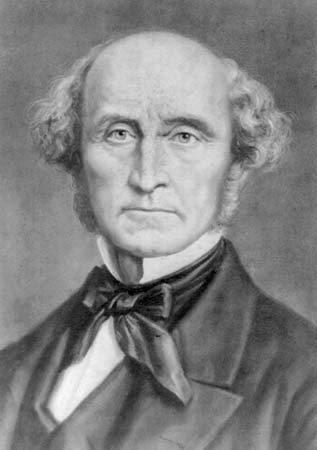
5. John Stuart Mill IQ: 200Wikipedia
Image-8
John Stuart Mill was an English philosopher, economist, and exponent of Utilitarianism. He was prominent as a publicist in the reforming age of the 19th century, and remains of lasting interest as a logician and an ethical theorist. Mill was a man of extreme simplicity in his mode of life. The influence that his works exercised upon contemporary English thought can scarcely be overestimated, nor can there be any doubt about the value of the liberal and inquiring spirit with which he handled the great questions of his time. Beyond that, however, there has been considerable difference of opinion about the enduring merits of his philosophy.
4. Gottfried Wilhelm von Leibniz IQ: 205Wikipedia
300Px-Gottfried Wilhelm Von Leibniz-1
Gottfried Wilhelm Leibniz (also Leibnitz or von Leibniz (July 1 (June 21 Old Style) 1646 – November 14, 1716) was a German philosopher of Sorbian origin who wrote primarily in Latin and French. Educated in law and philosophy, and serving as factotum to two major German noble houses (one becoming the British royal family while he served it), Leibniz played a major role in the European politics and diplomacy of his day. He occupies an equally large place in both the history of philosophy and the history of mathematics. He discovered calculus independently of Newton, and his notation is the one in general use since. He also discovered the binary system, foundation of virtually all modern computer architectures. In philosophy, he is most remembered for optimism, i.e., his conclusion that our universe is, in a restricted sense, the best possible one God could have made.
3. Emanuel Swedenborg IQ: 205Wikipedia
180Px-Emanuel Swedenborg Full Portrait
Emanuel Swedenborg was a Swedish scientist, Christian mystic, philosopher, and theologian who wrote voluminously in interpreting the Scriptures as the immediate word of God. Soon after his death, devoted followers created Swedenborgian societies dedicated to the study of his thought. These societies formed the nucleus of the Church of the New Jerusalem, or New Church, also called the Swedenborgians.
2. Leonardo Da Vinci IQ: 205Wikipedia
Davinci
Leonardo Da Vinci, Italian painter, draftsman, sculptor, architect, and engineer whose genius, perhaps more than that of any other figure, epitomized the Renaissance humanist ideal. His Last Supper (1495–98) and Mona Lisa (c. 1503–06) are among the most widely popular and influential paintings of the Renaissance. His notebooks reveal a spirit of scientific inquiry and a mechanical inventiveness that were centuries ahead of their time. The unique fame that Leonardo enjoyed in his lifetime and that, filtered by historical criticism, has remained undimmed to the present day rests largely on his unlimited desire for knowledge, which guided all his thinking and behaviour.
1. Johann Wolfgang von Goethe IQ: 210Wikipedia
Goethe
Goethe, German poet, playwright, novelist, scientist, statesman, theatre director, critic, and amateur artist, is considered the greatest German literary figure of the modern era. Goethe is the only German literary figure whose range and international standing equal those of Germany’s supreme philosophers (who have often drawn on his works and ideas) and composers (who have often set his works to music). In the literary culture of the German-speaking countries, he has had so dominant a position that, since the end of the 18th century, his writings have been described as “classical.” In a European perspective he appears as the central and unsurpassed representative of the Romantic movement, broadly understood.

Source here

Selasa, 01 Oktober 2013

10 People Who Lived To 100

A centenarian is a person who has attained the age of 100 years or more. The term is associated with longevity because average life expectancies across the world are far from 100. In the United States, centenarians traditionally receive a letter from the president upon reaching their 100th birthday, congratulating them for their longevity. In the United Kingdom and the Commonwealth Realms, the Queen sends greetings (formerly as a telegram) on the 100th birthday and on every birthday starting with the 105th. This is a list of ten great people who lived to 100 or more.
10. Charles Lane Lane
Charles Lane was born on January 26th 1905, and began acting professionally in 1929, becoming a founding member of the Screen Actor’s Guild in 1933. When he passed away in 2007, he was the oldest living American actor.
During his career he starred in hundreds of television shows, including Petticoat Junction, I Love Lucy and Little House on the Prairie. He starred in over 250 feature films, including Mr Smith Goes to Washington, It’s a Mad Mad Mad Mad World, and most memorably, as the rent collector in It’s a Wonderful Life.
Indefatigable to then end, Lane’s final acting role was in 2006’s The Night Before Christmas aged 101.
People aren’t the only life on this planet. Read The Oldest Living Things in the World at Amazon.com!

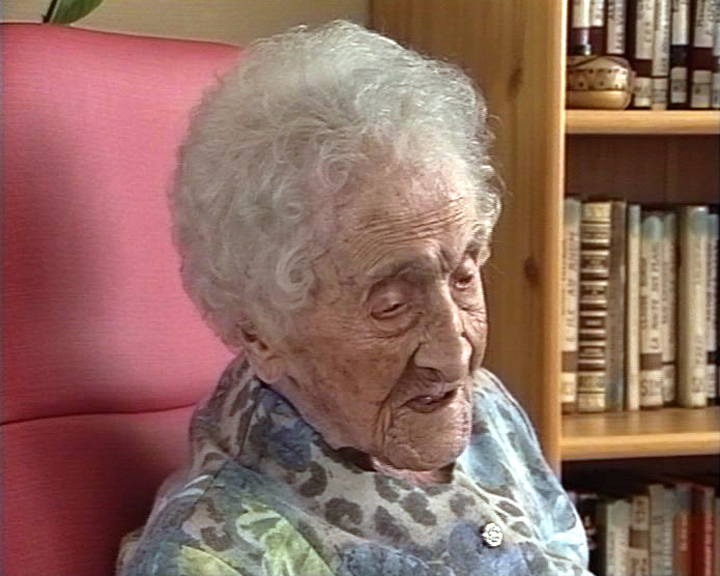
9. Jeanne Calment
Calment
Jeanne Calment is, according to Guinness World Records, the oldest person to have ever lived for whom there is irrefutable evidence.
Born on February 21st 1875 in Arles, France, Calment’s mother, father and brother lived to 86, 93, and 97 respectively.
As well as living through two world wars, Calment also met Vincent Van Gogh while he was staying in Arles, and attended Victor Hugo’s funeral in 1885. At the age of 114, she appeared in the film Vincent and Me, making her the world’s oldest actress, and in 1996, the nursing home she resided in released a CD of her reminiscing about her life.
Calment lived on her own until she was 101. She took up fencing at age 85, and was still riding a bicycle by the time she reached 100. She survived a hip operation at age 114 to become the oldest verifiable surgery patient, and remained an ardent smoker until she decided to quit at age 117.
She died on August 4th 1997, age 122.


8. George Burns Burns
George Burns was an Academy Award winning comedian and actor. His career spanned vaudeville, film, radio, and television, with and without his equally legendary wife, Gracie Allen. His arched eyebrow and cigar smoke punctuation became familiar trademarks for over three quarters of a century.
Enjoying a remarkable career resurrection that began at age 79, and ended shortly before his death at age 100, George Burns was as well known in the last two decades of his life as at any other time during his career.
The likelihood that Burns would live to see his 100th birthday became a running gag in his stage work, but he indeed intended to live that long, even booking himself to play the London Palladium as a 100th birthday celebration. However, his health seriously declined towards his centenary, and although he eventually reached it, he was too ill to perform any engagements and died just 49 days later.
7. Henri Fabre
Fabre
Henri Fabre was a French aviation pioneer, and inventor of La Canard, the first sea plane in history.
Henri Fabre was born into a prominent family of shipowners in the city of Marseilles. He was educated in the Jesuit College of Marseilles, where he undertook advanced studies in sciences. He then studied intensively aeroplane and propeller designs. He patented a system of flotation devices, which he used when he succeeded in taking off from the surface of the Etang de Berre on March 28th, 1910. On that day, he completed four consecutive perfect flights, the longest about 600 meters.
During the First World War, he established a company with 200 employees, which was specialized in the manufacture of seaplanes.
He died in 1984, age 102, as one of the last living pioneers of human flight.
6. Strom Thurmond
Thurmond
James Strom Thurmond, born December 5th 1902, was an American politician who served as governor of South Carolina and as a United States Senator. He left office, age 100, as the oldest serving US senator in history.
He ran for President in 1948 as a third party candidate for the segregationist States Rights Democratic Party, garnering 39 electoral votes. He represented South Carolina in the senate from 1954 to 1964 as a Democrat, and then from 1964 to 2003 as a Republican.
He left the Senate in January 2003 and died six months later, age 100.
Discover a universe full of ridiculously interesting facts with Listverse.com’s Epic Book of Mind-Boggling Top 10 Lists
at Amazon.com!


5. Irving Berlin Berlin
Born in Mogilev, Belarus on May 11th 1888, Berlin’s parents immigrated to the US in 1893, where he was forced to work various street jobs after his father’s death in 1896.
Berlin’s first taste of music composition was when the owner of a café where he was working asked him to produce an original song for them, as a rival café had had their own song pubished. Though he was paid just 37 cents for the result, this started Berlin off on a new career where he would become one of the most successful and prolific musicians and lyricists in history, composing over 3,000 songs including God Bless America, White Christmas, Anything You Can Do, and There’s No Business Like Show Business. He also composed 17 film scores, and 21 Broadway scores.
Berlin died of a heart attack in New York in 1989, aged 101.
4. Albert Hofmann
Hofmann
Born in Switzerland on January 11th 1906, Albert Hofmann changed the world irrevocably when, in 1938, he synthesised Lysergic acid diethylamide, which later became known as LSD.
He began experimenting with the drug in 1943, and subsequently wrote about his experiences. He became director of the natural products department at Sandoz and went on studying hallucinogenic substances found in Mexican mushrooms and other plants used by the aboriginal people. This led to the synthesis of psilocybin, the active agent of many “magic mushrooms.”
Hofmann calls LSD “medicine for the soul” and is frustrated by the worldwide prohibition that has pushed it underground. “It was used very successfully for 10 years in psychoanalysis,” he said, adding that the drug was hijacked by the youth movement of the 1960s and then unfairly demonized by the establishment that the movement opposed, though he concedes LSD can be dangerous in the wrong hands.
As of the time of writing, Hofmann is still alive and kicking.
3. Bob Hope
Hope
Bob Hope, was an English-born American entertainer who appeared in vaudeville, on Broadway, on radio and television, in movies, and in performing tours for U.S. Military personnel. He was well known for his good natured humor and the longevity of his career.
Born in London, England on May 29th 1903, Hope and his family immigrated to the US in 1920, when Hope was 20. He began by entering dance and talent competitions, winning prizes for his Charlie Chaplin impersonations. Soon he was landing roles in various film and theatre productions, and numerous broadcasting shows.
As well as commerical work, Hope performed over 60 USO shows, across half a century, entertaining troops during World War II, the Korean War, the Vietnam War, and the Gulf War. A 1997 act of Congress signed by President Clinton named Hope an “Honorary Veteran”. He remarked, “I’ve been given many awards in my lifetime — but to be numbered among the men and women I admire most — is the greatest honour I have ever received.”
Hope died on July 27th 2003, aged 100.
2. Queen Elizabeth, the Queen Mother
Queenmother
Elizabeth Bowes-Lyon, later Queen Elizabeth, was the Queen Consort of King George VI of the United Kingdom and the British Dominions from 1936 until his death in 1952. After her husband’s death, she was known as Queen Elizabeth, The Queen Mother, to avoid confusion with her daughter, Elizabeth II. Before her husband ascended the throne, from 1923 to 1936 she was known as the Duchess of York. She was the last Queen of Ireland and Empress of India.
Born into a family of Scottish nobility, she came to prominence in 1923 when she married Albert, Duke of York, the second son of George V and Queen Mary. As Duchess of York, she – along with her husband and their two daughters Elizabeth and Margaret – embodied traditional ideas of family and public service. She undertook a variety of public engagements, and became known as the “Smiling Duchess” because of her consistent public expression.
In 1936, her husband unexpectedly became King when her brother-in-law, Edward VIII, abdicated in order to marry his mistress, the American divorcée Wallis Simpson. As Queen Consort, Elizabeth accompanied her husband on diplomatic tours to France and North America in the run-up to World War II. During the war, her seemingly indomitable spirit provided moral support to the British public, and in recognition of her role as a propaganda tool, Adolf Hitler described her as “the most dangerous woman in Europe”. After the war, her husband’s health deteriorated and she was widowed at the age of 51.
With her brother-in-law living abroad and her elder daughter now Queen at the age of 26, when Queen Mary died in 1953 Elizabeth became the senior royal and assumed a position as family matriarch. In her later years, she was a consistently popular member of the Royal Family, when other members were suffering from low levels of public approval.
Only after the illness and death of her own younger daughter, Princess Margaret, did she appear to grow frail. She died six weeks after Margaret, at the age of 101.
1. Leni Riefenstahl
Riefenstahl
Helene Bertha Amalie Riefenstahl was a German film director, dancer and actress widely noted for her aesthetics and innovations as a filmaker.
Born to a working class family in Berlin, on August 22nd 1902, Riefenstahl began her career as a dancer before moving to acting in silent films. In the early 1930s, Riefenstahl gave up acting to pursue her love of film directing and photgraphy. Her first film, Daus Blaue Licht, released in 1932, was critically acclaimed and became hugely popular throughout Germany.
Riefenstahl became a supporter of Hitler shortly after he came to power, and wrote of his mesmerising abilities as a public speaker. Hitler, himself, was a fan of Riefenstahl’s work and asked her to direct a film about the Nazi Party’s 1933 Nuremberg rally, titled Victory of Faith.
Impressed by her work, Hitler asked her to direct another film about their 1934 Nuremberg rally, called Triumph of the Will. The film used pioneering camera and cinematography techniques to create a rousing and uplifting portrait of the Nazi party. Today the film is regarded as one of the greatest documentaries and propaganda pieces ever made, despite its distasteful subject matter.
In 1936, she was hired by Hitler to film the Berlin Olympic Games. The result, Olympia, is considered one of the greatest sport documentaries ever made, praised for its aesthetic beauty and pioneering use of the tracking shot, and various revolutionary editing techniques.
During the war, she remained in and around Germany, shooting as film production of Tiefland, based on Hitler’s favourite opera of the same name by Eugene d’Albert. However she fell ill, and the film wasn’t completed until 1954.
Despite being detained after the war, Riefenstahl denied any involvement with Nazi war crimes, nor any knowledge of them. After the war, she was unable to secure funding for her films due to her nefarious associations, and was often met with protests wherever she went. Nevertheless, Riefenstahl regained some respect as a photographer in Africa during the 70s, and as an underwater photographer. Her final film, Underwater Impressions, was a film presenting an idealised view of the life in the oceans. It was her first film since Tiefland.
Though she has always been accused of helping further Nazi propaganda, Riefenstahl is admired as one the greatest directors of all time, and along with Soviet film-maker Sergei Eisenstein, one of the pioneers of modern propaganda films.
Leni Riefenstahl died on September 8th 2003, aged 101.

Source here